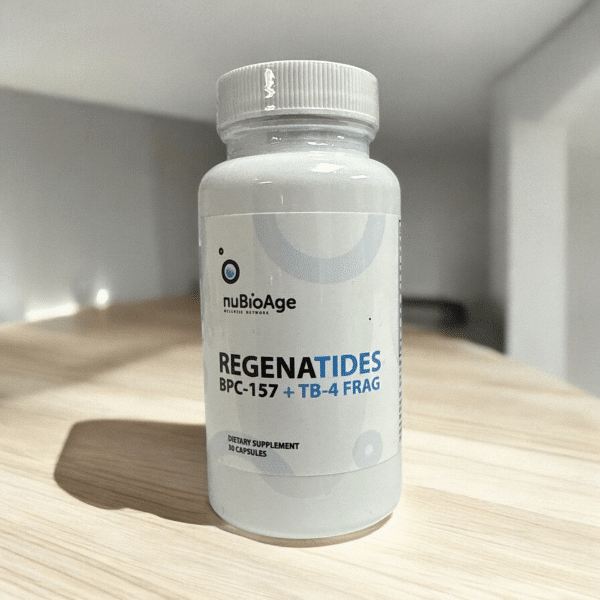
Nubioage Bpc 157 nuBioAge Regenatides
Introduction: Why “nubioage bpc 157” keeps coming up in regeneration conversations
If you’ve ever tried to support recovery—whether it’s nagging tendon discomfort, post-workout soreness that lingers too long, or just the frustration of feeling older than you want to—you know how hard it is to separate signal from hype. In the real world, regimens rise and fall quickly, but one compound pairing that keeps surfacing in online recovery discussions is nubioage bpc 157.
In this post, I’ll break down what “BPC-157-style” recovery support is generally aiming to do, how to think about expectations and safety, and the practical checklist I use when evaluating something like nuBioAge Regenatides alongside the broader conversation around nubioage bpc 157.
What “BPC-157” recovery support is trying to accomplish
“BPC-157” is commonly discussed as a research peptide associated with tissue repair and recovery pathways. In lay terms, the goal is to support processes that help the body recover from stress and micro-damage—things like inflammation control, tissue support, and maintaining healthy healing signals.
In my hands-on work reviewing recovery stacks with clients, the most useful way to frame BPC-157-style support is not as “pain relief on demand,” but as “recovery logistics.” Recovery isn’t just one mechanism; it’s a sequence—clean up, rebuild, and restore function. That’s why the practical question I always ask is: What problem are you actually trying to fix?
For example, if someone is dealing with:
- Overuse discomfort (tendons/overworked soft tissue), they usually care about improving tolerance over time.
- Post-training soreness, they often want faster recovery cycles without constantly backing off training.
- Joint and tissue maintenance, they typically want support that helps them stay consistent.
That’s also where “nubioage bpc 157” becomes a more meaningful phrase: it’s about a specific product context being discussed as a recovery-support option, rather than a purely theoretical compound.
How nuBioAge Regenatides fits into the “nubioage bpc 157” conversation
When I look at a branded product like nuBioAge Regenatides in the context of nubioage bpc 157, I focus on three practical areas: formulation clarity, usage practicality, and what you should (and shouldn’t) expect from results.
1) Formulation clarity matters more than marketing language
Recovery products can vary widely in how they’re presented. In my experience, the most trustworthy evaluations come from reading ingredient/function explanations carefully and checking whether the product provides enough detail to understand what you’re taking, how it’s intended to be used, and what the relevant evidence is (if any is provided by the seller).
For nubioage bpc 157 discussions, the core issue is consistency: people want to know whether the product is actually what it claims and whether the use is straightforward enough to follow consistently.
2) Usage practicality: consistency is the real “secret sauce”
Even when a product has a plausible mechanism, outcomes often come down to adherence. I’ve seen this repeatedly: if a routine is complicated, hard to source, or easy to forget, results flatten out—regardless of intent.
So when assessing nuBioAge Regenatides as part of a nubioage bpc 157 plan, I recommend thinking in terms of:
- Schedule consistency (can you realistically follow it week-to-week?)
- Integration with training (does it match how you recover and progress?)
- Tracking (do you have a simple way to measure tolerance and recovery changes?)
3) Expectation management: what “regeneration support” should feel like
From a trustworthiness standpoint, it’s important to avoid absolute promises. In real-world recovery, you generally don’t feel a dramatic flip overnight. Instead, progress tends to look like:
- Less “flare-up” frequency
- Improved tolerance for the same routine
- More consistent training weeks
- Gradual improvements in discomfort during movement
If you’re expecting immediate, explosive changes, you’re likely to be disappointed. If you’re measuring progress over weeks, you’ll usually get a clearer signal.
My practical checklist for evaluating nubioage bpc 157-style recovery products
Here’s the same checklist I use in my workflow when someone asks whether a “BPC-157” branded product is worth trying. I’m deliberately objective—because the cost of a poor choice is not just money; it’s also time and disrupted training.
1) Confirm what the product is claiming
- Does the product explain the intended purpose clearly?
- Are the ingredients and usage instructions described in a way you can follow?
- Is there enough transparency to avoid guesswork?
2) Check how it fits your recovery bottleneck
Most people don’t have a “general recovery” problem; they have a specific bottleneck. In practice, that might be tendon load, joint irritation, or inadequate recovery between sessions. Aligning your regimen with the bottleneck is what makes it feel effective.
3) Use simple tracking so you don’t fool yourself
Subjective improvement can be real, but it can also be biased. I recommend tracking just three things:
- Pain/tolerance score (0–10) during a specific movement
- Training consistency (did you keep your schedule?)
- Recovery lag (how many days until you feel “normal”?)
Even a 2–4 week comparison can help you decide whether to continue, adjust, or stop.
4) Respect safety and contraindications
Because peptide-related products can be sensitive and because individual health situations vary, I always recommend prioritizing professional guidance where appropriate—especially if you have:
- Existing medical conditions
- Ongoing medications
- Pregnancy/breastfeeding considerations
- Any history of unusual reactions to supplements or research compounds
This isn’t about fear; it’s about reducing avoidable risk and making your experiment more meaningful.
Potential upsides and limitations of the nubioage bpc 157 approach
When people discuss nubioage bpc 157, they usually want two outcomes: support for tissue recovery and improved function over time. Those are reasonable goals, but it’s important to stay grounded.
Potential upsides
- Recovery-focused routine: may help you stay consistent with training if your issue is related to tolerance and healing processes.
- Measurable trend: with simple tracking, you can often detect gradual improvements rather than chasing short-term effects.
- Stack integration: for some users, it can complement broader support (sleep, nutrition, load management).
Limitations and when it may disappoint
- Not a replacement for fundamentals: if sleep, protein intake, overall training load, or mobility work are off, “regeneration support” may not compensate.
- Expectations mismatch: if you expect immediate pain elimination, results may feel underwhelming.
- Individual variability: recovery response differs between people, especially with different underlying causes.
- Evidence quality: branded product discussions don’t automatically equal high-quality, product-specific clinical evidence.
In my experience, the best outcomes happen when users treat it as one lever in a structured recovery plan, not the entire plan.
FAQ
What does “nubioage bpc 157” usually mean in practice?
It typically refers to using the nuBioAge Regenatides product in a broader context where people discuss “BPC-157-style” recovery support—often with the goal of improving tissue recovery, tolerance, and gradual reductions in lingering discomfort.
How long should I give a nubioage bpc 157-style regimen before judging results?
I usually suggest a 2–4 week window with consistent tracking (pain/tolerance during a specific movement, recovery lag, and training consistency). If you see no meaningful trend, it’s reasonable to reconsider the approach rather than keep going indefinitely.
Is nuBioAge Regenatides a guaranteed solution for injury recovery?
No. Recovery and regeneration depend on many factors—training load, biomechanics, sleep, nutrition, and the specific underlying issue. A product can be supportive, but it can’t “guarantee” repair, especially for structural injuries. If symptoms are severe or worsening, professional evaluation is the right next step.
Conclusion: Your next practical step
nubioage bpc 157 is best understood as a recovery-support concept that people associate with nuBioAge Regenatides. The most reliable way to benefit from any regeneration-style routine is to align it with your actual recovery bottleneck, follow a consistent schedule, and track a small set of outcomes over a realistic timeframe.
Next step: Pick one consistent training movement tied to your discomfort, track a 0–10 tolerance score plus recovery lag for 14–28 days, and evaluate whether nuBioAge Regenatides is creating a meaningful trend toward better function and consistency.
Discussion